Friday, May 24, 2013

Meet the Cockadoodleoodler!

It can take weeks before you realize you have a rooster. You go through the stages of grief in losing a potential egg layer...

Denial - No... It can't be a cockerel. It's just a dominant hen... They wouldn't have sent me a rooster...

Anger - You gotta be kidding me! The $&%^ rooster is crowing at 5 in the *&$^ morning!! McMurray's is going to get a earful from me!

Bargaining - C'mon. You can be a quiet rooster... I'll give you extra feed if you don't start crowing until 7AM.

Depression - What the heck am I gonna do with a rooster? That is potentially 7 less eggs a week... Why even go on...?

Acceptance - Well... Maybe I will get a few chicks out of the deal and if not I can make a nice stew with him.

So the boyfriend named him Herb. Herb Cockadoodleoodler. But the neighbor named him Jasper and so that is what stuck.

Jasper Cockadoodleoodler
So, meet Jasper. Jasper Cockadoodleoodler.

Yes, I live in a neighborhood in Seattle. No, roosters are not allowed. No, I will not tell you where in Seattle I live.

Now, keep in mind I talk with my neighbors and I ask them to tell me if there is a problem with my birds and their sleep cycles. If there is an issue, Jasper will sleep in my stew pot.

But otherwise, he is sweet. And he is a good looking bird. I believe that he is an Ameraucauna, he's got the blue grey feet and, hopefully, he will be a good sire of many baby chicks. And again if not, he will be delicious.

I have come across many people who have tried to give away their roosters in the romantic and naive hope that they will live out their life on some farm somewhere and never even have an inkling that there is a pot out there that, potentially, cooks chickens.

I admit I tend to look on those people with a slight bit of disdain. Do not get me wrong, to each their own, but I believe that if you are going to raise farm animals you should know how to dispatch a unwanted rooster or an injured hen, quickly and efficiently. I would say the same about goats, pigs, rabbits and other small farm animals allowed within the city limits.

I don't mind having a rooster, even one who crows at 6AM, but if it becomes a problem with my neighbors, I will not try to push my responsibilities off onto someone else and will take Jasper... Out, so to speak.


Monday, May 20, 2013

Laura Ingalls Wilder

I blame it all on Laura Ingalls Wilder.

As a young girl I loved the Little House on the Prairie television show. I watched it every week and yearned to be friends with Melissa Gilbert's Laura Ingalls.

I read the Little House books over and over until my copies were tattered and dirty from reading in the tall grass of the field by my house in the hot summer sun. I wanted to be a pioneer girl. I wanted to run through fields of tall hay and milk cows and draw water from the well and climb hay stacks and make maple candy and sugar.

I just re-read the books after 30 years. They reminded me of why I am so enamoured by self sufficiency.  It's all Laura's fault.

I still want to live in a little house on the prairie. I still want to be a pioneer girl and make my own bread and tat my own lace and churn my own butter. I want to give these books to every little girl I see and tell them, "Read this. It's about a strong woman in a strong time doing strong things."

Bubble, Bubble, No Toil or Trouble

A few weeks back I culled about nine meat birds. We have been enjoying lovely roast chicken dinners almost every Sunday since. I love roasting a bird on Sundays because you have a yummy dinner with the one you love and you have left-overs for the rest of the week.

I try to roast them whole, so that I can take advantage of the whole bird. Once we are done with Sunday dinner, I pick off the rest of the meat, put it in a storage container to use for dinners later in the week and freeze the carcass for broth.

I don't like to waste food, and I find it much more cost effective to can my own broth for future use. Store bought broth can be a couple bucks a can,

So I decided to do some math... I purchased the birds from Murray McMurray's and spent $97.33, including shipping for 25 birds. This came up to $3.89 per bird, what it would have cost me to purchase them from a local supplier or farm.

In the 9 weeks that I had the meat birds I purchased 10 bags of feed at $18.00 a bag.  I had 25 birds including the meat birds, this came up to .72 cents a bird per bag. Each bird cost me approximately $7.20 to feed. (We will gather that the meat birds ate a larger share of this, but I am not going to try to calculate how much more...)

Cost of bedding was another $9.00 a bale and I purchased five bales of shavings. This would come up to $1.80 a bird.

In total is cost me $12.89 a bird. At this price it was still cheaper than buying a organic bird from my local Co-op!


I have chicken livers in the freezer to make pâté, as well as, gizzards, hearts and feet in order to get the most bang for my buck. I use the carcasses for broth and I can get one or two more dinners from the left overs. The other week it was chicken enchiladas.

When I have two or three carcasses in the freezer I make broth and can it. I use the broth for gravies, pastas and soup base. It tastes better than the store bought stuff and, again, it is cheaper.

The broth isn't all that exciting, veggies and chicken bones. I keep onion skins and carrot peelings in a bag in the freezer and use that in making my broth. Throw in some celery and today I found a great deal on leeks, so I threw those in too.

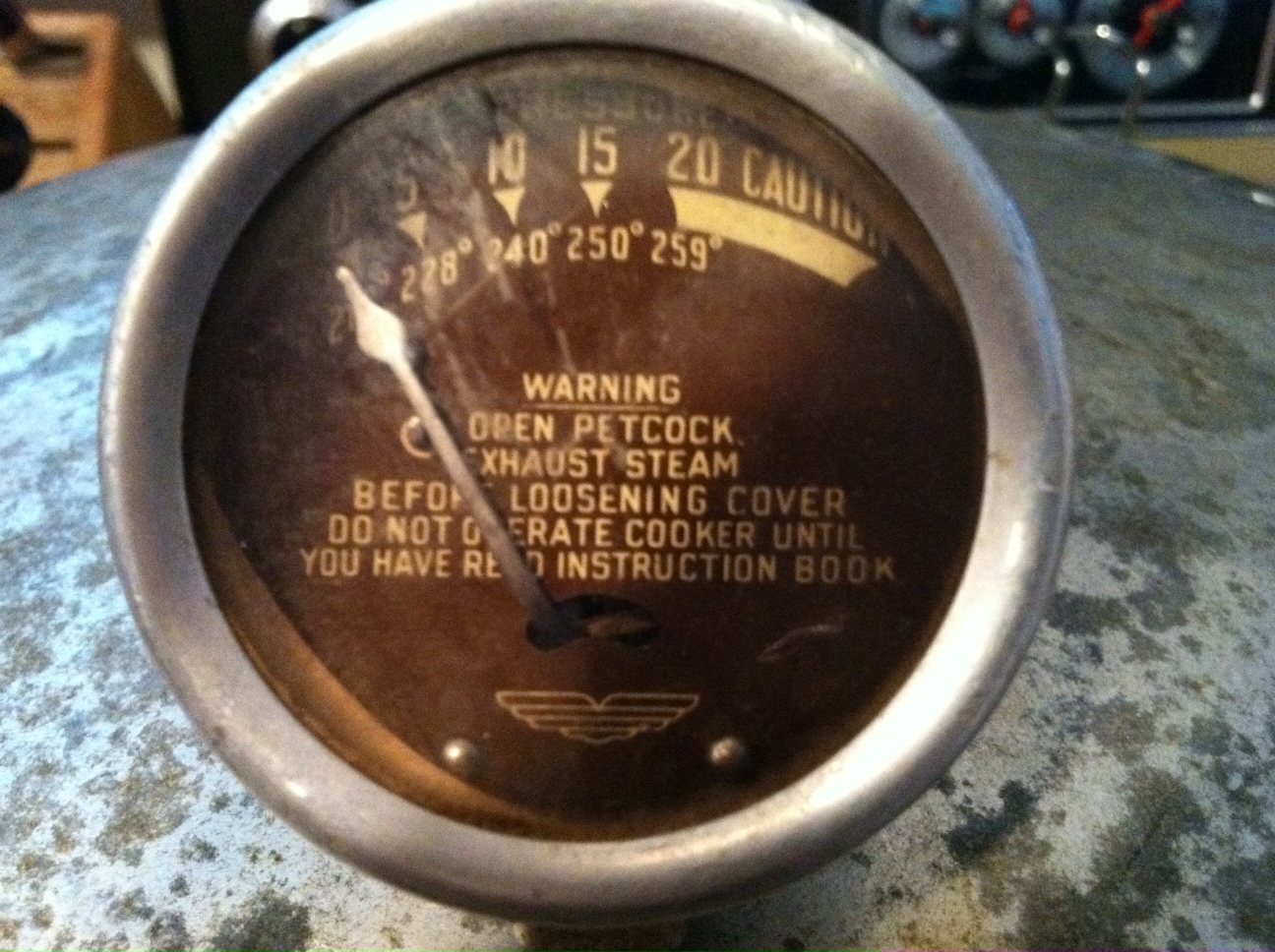
Bring to a boil then drop it to a simmer for an hour or two. Strain it with cheesecloth and can it. With broths you do have to pressure can them and process them according to the canner instructions. I processed my cans at 10lbs for twenty minutes.

I now have a dozen pint cans of broth for use ready to go on my larder shelf. When you take into consideration that some stores carry chicken broth for $1.50 a can, I find that canning it myself is cost effective.


Thursday, April 4, 2013

Meat is Murder... Tasty, TASTY Murder

This year I got Cornish X Rock meat birds from Murray McMurray Hatchery. I've never raised meat birds before and have found there are quite a few differences.

They grow amazingly fast. They are triple even quadruple the size of the egg laying birds I got at the same time. They are lazy and are content finding a spot and lying there the whole day, especially if they can lie down with their face in the feeder so they can eat at the same time.

They are not as fastidious as their egg laying cousins and will lie in their own poop, they are not picky about this.  I have found I need to keep the coop regularly cleaned as it does cake on their breast feathers and will make for an unpleasant job at processing time. I ordered 25 birds in total 15 of which are meat birds and this was a bit tight for my coop space until it got nice and I was able to let them wander a bit more.

They are greedy and will push all other birds out of the way of food and water, they are much more food aggressive so if you are able to keep them in a separate coop that is a good option. But not necessary, they are not overly violent to the smaller birds they just want to get to the food first.

Did I mention they grow FAST?  They are 9 weeks and ready to be processed this upcoming Saturday. I believe that most will probably dress out at 5-6 lbs. Some might even be larger! I believe there will be a few nice roaster/broilers in the bunch.  I've already processed 6 and have another 9 to go. The ones I processed a couple weeks back were 3-4 lbs, perfect for fryers.

I like to roast a chicken every Sunday as it makes for a very nice Sunday evening meal and leftovers for the boyfriend and I all week long for lunches and easy dinners.  It will be nice to be able to roast my own homegrown birds, knowing they led happy lives and ate good food and bugs.

I make a simple roast bird

1 large roasting chickens, trussed
Salt and pepper and fresh thyme from the garden

I rinse and pat dry the chicken sprinkle salt and pepper and thyme generously all over the bird and stick it in a 400 degree Fahrenheit oven for a hour and forty-five minutes to two hours. It is always good to put the bird over a bed of sliced potatoes and let them roast in the schmaltz. YUM!


Monday, February 4, 2013

The Chick is in the Mail

 I received my order of Murray McMurray chicks in the mail today!

They were boxed very securely and all look very healthy and were quite vocal about their dislike of being shipped in the mail. All but one survived.

I had to pick them up from the Post Office and since my back is killing me, I am home from work and was able to do so. I could hear them peeping as soon as I walked in.

I had the nice lady at the post office help me carry the chicks to the car(not that the box was all that heavy, it is basically full of fluff) and brought them on home to their coop. Light was already set up and ready for them. Filled their water, I made sure they all got a sip and now they are exploring their little pen.


 I have 25 chicks. I purchased the Meat-N-Egg combination from McMurray's Hatchery and the meat birds will be slaughtered at about 7-10 weeks old.  Approximately fifteen of the chicks should be meat birds and the rest should be egg layers.

Because the meat birds are a young age when slaughtered they are much more tender than the old hens I had culled to get the coop ready for this shipment.

Meat chickens are bred to grow fast and provide a lot of breast and thigh meat. In fact, some breeds grow so fast and get so heavy in a short amount of time that their legs break. In order to attempt to mitigate or avoid this, you can purchase a vitamin booster. I had the Broiler Booster included with my order as well as a package of Quik Chick. I haven't tried these supplements before so this is a test run for me. I will see how it turns out!

The meat birds that are included in this combination is Cornish X Rocks and/or Cornish Roasters. Both are big breasted, big thighed birds. They remind me a little of me... Anyways, they are bred to grow fast and big. The Cornish X Rocks (Cornish Cross Rocks) should hit their  mature weight 3 to 4 lbs and be ready for slaughter anywhere from 6 to 8 weeks.  While with the Cornish Roasters you have the option of using them as Fryers at 8-9 weeks and they will be 3-4 lbs at that point or you can slaughter them at 12 weeks or so and they will be Roasters at 8-9 pounds!!! That is a big bird!

Meat birds are bred to be much more appealing in looks once dressed, meaning they have the common yellow skin you see in the grocery stores.

I am not sure what egg layers I have in the bunch since with the Meat-N-Egg combo you do not get a choice, but they should be from their batch of rainbow egg layers, so this means they can be just about anything!

Only one bird did not survive the shipping... McMurray's credited that amount for my next purchase. Which was more than fair and very good customer service.

In the past I have always purchased birds from the local grange or feed store, but they never carried meat birds. I think this might be the best option for future orders!

Friday, January 25, 2013

Hurry! Hurry, Murray McMurray!

(had a bad case of insomnia last night which brought on an anxiety attack this morning, so I decided to stay home from work since I am pretty much worthless at work today. Gives me a chance to work on the blog!)

My chicks are on order from Murray McMurrays Hatchery and should be here the first week of February!

I've ordered the Meat-N-Egg Combo. This is a combination of 15 meat birds and 10 egg-layers. It was the best deal, in my opinion, for what I wanted; enough meat birds to last me several months and then the egg-layers to last a couple of years!  Yes, yes, I know that that is over the amount allowed in the city, but since the meat birds will be culled at 7 to 10 weeks. I am justifying this decision.

I have been slowly culling the birds I currently have, a couple every week in order to make room for the chicks on order. The boyfriend is more attached to the birds and I don't make him help me. Once the chicks come, I get the feeling he will be out in the coop cuddling baby birds every chance he gets.

There was an online discussion recently concerning culling (killing and butchering) versus giving the birds away. I am personally of the culling ilk and I have been called a chicken murderer on a regular basis. I feel that all you are doing by giving the birds to someone else is shuffling the responsibility to another person, potentially a kind-hearted person who does not necessarily realize that the birds will not lay regularly. They will then either have to decide to cull the birds themselves, give them to another kind-hearted person who will then have to make those decisions or let them loose, which is illegal.

I tend to believe that if you are going to go into keeping chickens you need to consider what you are going to do with them once their egg production slows to the point that it is not economically feasible to keep feeding them. If you want pet chickens, then you need to know that birds can live upwards of 7 to 8 years and only lay eggs regularly during the first couple of years. Like most female animals, chickens have a finite number of eggs they can produce.

Chickens are also extremely territorial and adding chicks and hens to a flock can be a traumatic experience, full of maimings and fights to establish pecking order. Chicks might be killed outright be older hens if introduced directly to a flock and will be constantly beat up if introduce when older, which may subside or it may not.

If you are fine with this and just want a pet chicken, then go with them. Chickens do make wonderful pets. They can be sweet if properly socialized, just like any pet. They are smart and can be trained. They are funny and can provide hours of entertainment. They have personalities. But they do have relatively long lives.

But if you just want them specifically for their eggs, you need to consider your plans for them when they are no longer laying as often as they once had. You get approximately two good years of regular laying, after that it tapers off significantly each year. If you plan on giving them away, ask the person taking them what their future plans are for the birds. Or if you are interested in learning how to cull the birds, there are classes available on how to dispatch your birds humanely and quickly, and to butcher them for your meal.

There is a class coming up in February through the Seattle Farm Co-op. Contact them for information on this.

Wednesday, August 22, 2012

Yes, You Can! Carrots!

Today during lunch, I walked through the Pike Place Market. I like Wednesdays at the Market. Those are the Farm Days.

On Wednesdays, Saturdays and Sundays the local farms bring their wares. Today I was able to find carrots that traveled no more than 50 miles. Now other than the carrots I grow in my front yard, you can't get any more local.

I did grow carrots this season, but I did not grow enough to can for the winter, so I am supplementing my crop with those of a local farmer. Four dollars for a couple of glorious bunches. The stall worker asked if I wanted to top the leaves, but I give those to the chickens for a treat, so I said, "No. Thank you!" and was on my walk back to the office.

I love a beautiful carrot and these are some lovely carrots, and sweet!

I cut off the tops and threw them to the chickens who happily and noisily noshed on the greenery.

I scrubbed the carrots down and then gave them a peeling, scrubbed them down again and plopped them into a bowl of cold water as I got the jars and lids ready.

 I gave the peelings to the chickens which made them even happier! I like happy chickens, that means they lay happy eggs which make my belly happy!!
In the meanwhile, I had started getting my jars ready. I give them a quick wash and rinse and then plop them in my big pot full of water and bring them to a boil and then drop the temperature to med to just keep them hot and sanitized. In a small sauce pan I put my lids in to boil.

I like canning veggies in pint jars because I feel that is the right amount for two people most of the time. Less waste than opening a quart and then not finishing it. Others might prefer quarts.


I like my carrots diced in the round, others like sticks. It is a preference thing, do whatcha like.

I will usually slice my rounds about a half inch thick. Does that mean they are all a 1/2 inch? No. Some are 3/4 of an inch and others are 1/4 inch. It all evens out.... (bad joke, sorry)

Anyways, I get my carrots sliced up and I put a kettle on to boil. I figure if I do not have to ladle hot liquids if I don't gotta then I wont.

I pour my carrots into a hot empty jar (sadly I do have to add the empty jar part...) and pack them in tight until they squeak.. Then I add about a half teaspoon of salt and poor in my hot water from the kettle. Easy Peasy!

 Now, the important part.  Make sure to read this.

Vegetables in order to be canned safely must be pressure canned.

If you have not added any kind of acid, such as lemon juice or vinegar and are simply strait canning vegetable with a water base then the vegetables MUST be processed in a pressure canner in order to make sure all pathogens and bacteria have been killed.

A water bath canner will work for jams, jellies, pickles, pie filling and such because fruits are generally high in acids, you have added an acid; such as vinegar or lemon juice, or you have used a large quantity of sugar. These factors retard bacterial growth on these items.

Unfortunately with vegetables they are lacking in acids and in order for them to be safely canned only the high heat and pressure of a pressure canner will sufficiently kill the natural bacteria that can grow out of hand.

If you do not have a pressure canner make pickles. Do not attempt to water bath can vegetables. You will usually hear of one or two families in the news every year that have got extremely ill because of badly canned green beans.

And now that I have sufficiently scared you...

You will now process the cans at Ten lbs in your pressure canner! For pints you will need to process them for 25 minutes at ten pounds and for Quarts, 30 minutes.

Make sure to read the instructions for your pressure canner. Most now-a-days are very easy to use and you should have very little fear of the exploding pressure canner of olden days. The ones made in the last 30-40 years are very safe. Be a little wary of your grandmother's pressure canner though, the ones that have clamps. As long as you keep an eye on the pressure you will be fine.

Do not try to remove the lid when it is still processing or until the pressure gauge has dropped down to zero. When you go to take the lid off, do not be surprised if it makes a POP sounds.

I tend to remove my jars once the pressure has been released and let them cool on the counter. Other people leave them in the pressure cooker to cool down inside. Both work.


Be very careful, the jars are scalding hot and will be for a while. You will know that you are properly sealed once you hear the ping of the lid and the top is firm. The sounds of the pop/ping of the lid sealing is one of my most favourite sounds.

When you are ready to pop open your canned carrots in the winter, look into the jar closely. Is there any growth along the top or sedimentation that looks iffy on the bottom? When you pop open the jar does it smell funny? If there is ANY doubt, throw it out.

Botulising yourself is not fun. Don't even chance it.